
Amboseli National Park
Amboseli National Park, formally known as Amboseli Game Reserve, is one of Kenya’s iconic and one of the most celebrated safari destinations (wildlife viewing destinations), known for its stunning beauty and large herds of elephants. This National Park is located in Loitoktok District, Kajiado County in south-western Kenya, near the border with Tanzania. The Amboseli National Park is the third most popular destination on Kenya wildlife safari itineraries/Kenya Safari packages after the Masai Mara National Reserve and Lake Nakuru National Park.
Amboseli safaris are renowned for their iconic elephant viewing experiences and spectacular views of Mount Kilimanjaro. Beyond elephants, the National Park also hosts impressive numbers of other wildlife species, including lions, cheetahs, hyenas, giraffes, zebras, wildebeest, buffalo, and over 420 different bird species.
The Amboseli National Park covers a total land area of approximately 392.06 km² (39206 ha), encompassing a diverse ecosystem comprising acacia woodland, rocky thorny bush, swamps, marshland, and a Pleistocene lake, all of which provide refuge to a diverse range of birdlife and wildlife in Kenya. The word ‘‘empusel’’ which means ‘‘salty dust’’ in the local Maasai language, gives the park its name; therefore, the name “Amboseli” is derived from a Maasai word meaning “salty dust”, reflecting the dry, dusty conditions that characterize much of the park.
This National Park was named so because of the dusty dry lake bed that dominates the area, and the dusty environment, especially during the dry season. When planning a vacation to Kenya/a Kenya Wildlife safari/ Kenya Holiday Tour, Amboseli National Park should surely be among the top 3 places to visit in Kenya, especially for wildlife watching/Wildlife viewing in Kenya. The experience in Amboseli is unique as it blends spectacular views of nature with unbeatable wildlife safaris, cultural encounters, and several other activities. Discover Kenya’s Amboseli National Park also known as home to the giant herds of elephants on your next African Tour/ Kenya Trip with Nirvana Safaris.
History of Amboseli National Park: Local community and Establishments
The history of Amboseli National Park dates back centuries, when the region served as grazing land for the Maasai people. The Maasai, one of East Africa’s most recognized indigenous communities, have long lived in harmony with the wildlife that inhabits the Amboseli ecosystem. Amboseli was first set aside as a Reserve in 1906 and was managed by the British Colonial Government at the Time. The area covered by the Southern Reserve (Amboseli Game Reserve) was part of the British East African Protectorate, which was established in 1895. The first European to penetrate this then feared region was Jeremy Thompson who visited the area in 1883. In the past, this area was astonishing, with a fantastic array of wildlife and a striking contrast between the arid areas of the dry lake bed and the lush oasis of swamps. As of today, the area is still astonishing with its contrast of dry lake bend and the oasis of the swamps.
After its establishment in 1906, the local Maasai people who originally occupied the area were displaced, and the administration of this region was in the hands of the British colonial administration. The colonial government regulated land use, hunting and later wildlife conservation, which later contributed to its establishment as a National Park.
Amboseli National Park
In 1948, it was declared a Game Reserve and the control and administration were returned to the local Masai community. It was later gazetted as a national park in 1974 by the Kenyan government to protect the core of this unique ecosystem. Later in 1991, this area was declared a UNESCO Biosphere Reserve. Some of the reasons for its UNESCO status include the Unique Hydrology and ecology, an exceptional elephant population, high biodiversity, cultural heritage of the Masai, and Role in community led conservation. After earning $3.5 m (€2.9 m) in 2005 then the Kenyan president (Mwai Kibaki) declared that control of the park should pass from the Kenya Wildlife Service (KWS) to the Olkejuado County Council and the Maasai tribe giving the local people full control of the park.
Although several debates arose about this decision and even challenged it legally in the courts of law, this decision has been a great success in terms of promoting community led conservation. Although as of today, the Kenya Wildlife Service (KWS) remains a vital partner in the operations of the park, the Kajiado County Government is responsible for the management of the park.
Top Attractions in Amboseli National Park: Wildlife, Birdlife, & Elephants Wildlife in Amboseli National Park
-
Mountain Kilimanjaro view
One of the main attractions of Amboseli National Park is the back drop spectacular view of Mount Kilimanjaro. Standing at 5,895 meters, Kilimanjaro is Africa’s highest mountain and provides a stunning backdrop for wildlife photography.
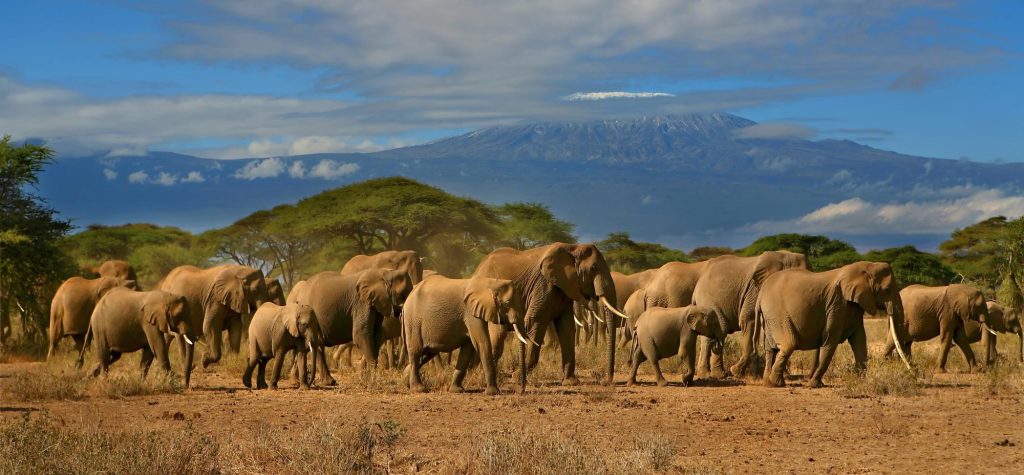
The best views are usually seen in the early morning and late afternoon when the clouds clear, revealing the snow capped peak. Photographs of elephants walking across the plains with Mount Kilimanjaro in the background have become iconic images of African safaris. Early mornings and late afternoons offer the best opportunities to witness the mountain’s snow capped summit emerging from the clouds, creating unforgettable safari moments.
-
The Large Elephant Herds
Home to the most wildlife, particularly African elephants. The elephants that live permanently in Amboseli National Park are part of the main attractions in the park that make it famous. Habitating over 1600 Elephants in their natural habitat overlooking a back drop vie of the towering snow caped mountain Kilimanjaro.
Amboseli is internationally famous for its large African elephant herds. The park is home to hundreds of elephants, including some of Africa’s largest tuskers. These elephants have been the subject of long term research by the Amboseli Elephant Research Project, one of the world’s most important elephant studies. Visitors can observe elephants at close range as they move across the plains, bathe in swamps, and interact within their family groups.
-
Birdlife in Amboseli
On top of boasting incredible wildlife numbers, Amboseli also hosts large numbers of birdlife, including rare and migratory species. About 400 different bird species have been recorded within the park boundaries, and an impressive array that surely makes it one of the best places to visit for birding safaris in Kenya/bird watching in Kenya. The bird life in the park occupies the diverse environments in the park, including the swamps and grasslands.
Some of the most common species in Amboseli include: Taveta golden weaver, African jacana, African swamp hen, goliath heron, Hartlaub’s bustard, rufous chatterer, Dickinson’s kestrel, greater flamingo, Eurasian thick-knee, Hartlaub’s bustard, lesser flamingo, long-toed lapwing, rufous chatterer, Pangani longclaw, von der Decken’s hornbill, rufous-bellied heron, spike-heeled lark, steel-blue whydah, yellow-necked spurfowl, and common redshank among others. Those looking forward to experiencing Kenya’s avian diversity or looking forward to Kenya birding safaris, Amboseli National Park is a great birding destination. One of the best ways to experience the park’s diverse birdlife is by driving through the park in a customized 484 safari vehicle visiting various birding spots.
-
Seasonal Lake Amboseli
Although less popular than its counterparts, like the large herds of elephants, Lake Amboseli is still a top attraction in Amboseli National Park. Lake Amboseli is a temporary lake located in the northwestern region of the park. It occupies the largest part of the park and is known to dry up when the dry season kicks in (between June to October and December and February). Despite being a seasonal lake, it fills up and sometimes floods during the wet season. The lake basin is a great habitat for most wildlife, especially during the dry season.
Fed by the underground streams from Mount Kilimanjaro, it only floods into shallow, alkaline marshes during heavy rains, briefly attracting large flocks of flamingo birds and, and it serves as an iconic, dusty backdrop for the park’s famous large herds of African elephants.
-
Wildlife in Amboseli National Park
Amboseli National Park is one of the best places to witness the African elephants and other iconic African wildlife species. Most wildlife safaris in Kenya’s Amboseli National Park are known for their iconic wildlife sightings against some of the best backdrops of the vast savannas and mountains. About 80 different wildlife species live in the park including the famous African Big Five (lion, leopard, rhino, buffalo, and elephant), cheetahs, giraffes, wildebeest, zebra, and hyenas among others.
The wildlife in occupy the various habitat including the vast savanna areas and the wetland regions. During wildlife safaris in Amboseli National Park, visitors get the chance to witness the various wildlife species especially the large herds of elephants just a few meters away from their vehicles. When planning a wildlife safari to Kenya, consider booking a Safari/Trip to Amboseli National Park (home to the giants) and experience the famous sighting of large elephant herds and other wildlife.
Activities to do in Amboseli National Park
-
Game Drives
Game drives are the most popular activity in Amboseli National Park. Visitors can explore the park in the early morning, late afternoon, or even at night in designated areas. Game drives provide excellent opportunities to see elephants, lions, cheetahs, buffaloes, giraffes, zebras, and many other animals in their natural habitat.
Amboseli National Park is one of the best destinations to witness iconic African wildlife species, including the African elephants. Being the home to over 1600 African elephants, one of the major factors as to why it attracts a numbe rof tourist annually.
-
Bird Watching in Amboseli
Amboseli National park is a perfect destination for bird lovers, it hosts large numbers of birdlife, including rare and migratory species. About 400 different bird species have been recorded within the park boundaries.The swamps and wetlands are particularly productive areas for spotting water birds and migratory species. Notable Bird species include:
- Waders and water Birds: Saddle billed stork, African Spoonbill, Goliath Heron and African Fish Eagle.
- Migratory Birds: European Bee Eater and Harriers. From November to April, the park’s bird population swells with these northern migrant birds.
- Birds of Prey: Falcons and Kestrels, Bateleur Eagle, Martial Eagle.
Best Time of the year for Bird watching in Amboseli National Park.
Amboseli National Park presents an all year around Bird watching opportunity since most of the bird species reside in the park’s swamps and around the lake and can be visible throughout the year. However from November to April, thousands of migratory birds escaping the cold European winter fly into the park and thus increasing the bird population in Amboseli. This specific window offers a great opportunity to spot a variety of different bird species while on your African safari in Kenya.
-
Maasai Community Cultural Visits.
Close to 70% of the Amboseli wildlife lives out of the protected areas mostly occupied by the Maasai people, who are famously known for co-existing with the wildlife animals in the Amboseli plains. Visitors can engage in Maasai cultural experiences by visiting nearby Maasai villages. These visits offer insights into traditional Maasai customs, dances, crafts, and ways of life.
When to Visit Amboseli National Park: Best time to visit Amboseli National Park
Kenya is a great safari destination year round; however, some months of the year are known to offer the best conditions for safari. Kenya has two seasons, the dry season and the wet season. These seasons come twice each year round and are usually in between each other. The dry seasons are considered the best time for visiting Amboseli National Park and Kenya in general. The longer dry season between June and October is considered the best time to visit Amboseli National Park and Kenya in general for wildlife viewing and all other safari activities.
The other dry season also occurs between December and February, which is also ideal for safaris in Kenya. It is however, important to know that the best time to visit Amboseli National Park can also be influenced by what you are looking forward to seeing during your visit. The dry season is ideal for those looking forward to memorable wildlife viewing in Kenya; however, the wet months of the year are great for bird watching.
During the wet months of the year, the bird activity can be witnessed all over the park and visitors get the chance to see the plumage and birds breeding. It is also perfect for photography since the lush greenery that comes with the wet season offers spectacular backdrops for beautiful pictures.
Getting to Amboseli National Park: How to Get There?
By Road;
The National Park can be accessed by road from Kenya’s Capital, Nairobi. There are five gates to Amboseli (airstrip gate, Kulunyiet gate, Kimana gateiremito gate, and Meshananai gate) that can all be accessed just a few hours’ drive from Nairobi. The Meshananai Gate is about a 2 ½ hours’ drive from Nairobi. If you opt to use the Kimana Gate, you will drive about 228 kilometers passing through mali to Mombasa which takes you to the Easter part of this park.
Getting to Amboseli National Park by Air
There are several flights from Nairobi to Amboseli National Park. The flight duration from Nairobi to Amboseli National Park can vary depending on several factors; however, flights from Nairobi’s Wilson Airport to Amboseli’s airstrip take about 30 to 45 minutes.