
Lake Kivu, Rwanda: Complete Travel Guide, Attractions & Things to Do
The first thing visitors notice about Lake Kivu, Rwanda is not its size or even its beauty. It is the remarkable stillness. Mornings begin with a gentle mist drifting across the water as wooden fishing boats return from the night’s work, their crews exchanging laughter after hours spent beneath a sky filled with stars. Along Lake Kivu, Rwanda shoreline, life unfolds at an unhurried pace. Women arrange freshly caught fish for the day’s market, children play near the water’s edge, and the aroma of freshly brewed Rwandan coffee drifts from cafes overlooking the lake. Here, nature is not simply admired from a distance. It shapes everyday life.
Occupying Rwanda’s western border with the Democratic Republic of Congo, Lake Kivu stretches through a landscape where fertile hills, hidden caves, and Island dotted waters create a scene that feels untouched by the rush of modern life. Every section of the shoreline reveals a different personality. Rubavu hums with lively beaches and lakeside restaurants, Karongi charms visitors with peaceful bays and scattered Islands, while Nyamasheke invites visitors into coffee-growing communities where sweeping lake views accompany every cup. Rather than revealing everything at once, Lake Kivu rewards those willing to slow down, explore and experience the rhythm of a destination where every sunrise and sunset seems to tell a different story.
History of Lake Kivu, Rwanda
Long before travellers discovered it, extraordinary natural forces had already shaped its quiet shores, Lake Kivu. Millions of years ago, the movement of the Earth’s crust split apart sections of East Africa, while volcanic eruptions carved deep depressions that gradually filled with water. The result was one of Africa’s Great Lakes, surrounded by dramatic highlands and crowned to the north by the towering Virunga volcanoes. This powerful geological history continues to define the lake’s identity, influencing everything from its exceptional depth to the unique composition of its waters.
As centuries passed, the lake became the heartbeat of communities that settled along its shores. Families relied on its rich fisheries, cultivated crops on the fertile volcanic soils, and used its waters as a natural highway connecting villages long before paved roads existed. Fishing traditions evolved into ceremonies of cooperation and skill, with teams venturing onto the lake after sunset, guided by lanterns whose reflections still dance across the water each evening.These customs remain an enduring symbol of the close relationship between the people and the lake that has sustained them for generations.
The colonial era introduced new settlements and transport links, particularly around present day Rubavu, where the area’s cool climate and magnificent setting attracted administrators and missionaries. Although development gradually transformed parts of the shoreline, the lake retained its cultural significance and natural character. In the decades following Rwanda’s independence in 1962, Especially during the country’s remarkable national renewal, Lake Kivu emerged as one of the country’s defining leisure
destinations. Investments in hospitality, infrastructure, and environmental conservation opened its shores to the world while preserving the traditions that make the region unique.
Today, Lake Kivu represents more than scenic beauty. Hidden beneath its tranquil surface lies one of the world’s largest natural reserves of dissolved methane gas, a rare phenomenon that has placed the lake at the centre of global scientific research. Rwanda has transformed this remarkable geological feature into a valuable source of clean energy through carefully managed methane extraction projects, demonstrating how natural resources can be harnessed responsibly. It is this remarkable intersection of ancient geology, living culture, scientific innovation, and timeless landscapes that makes Lake Kivu far more than a destination on a map. It is a place where the past and present continue to meet on the water’s edge.
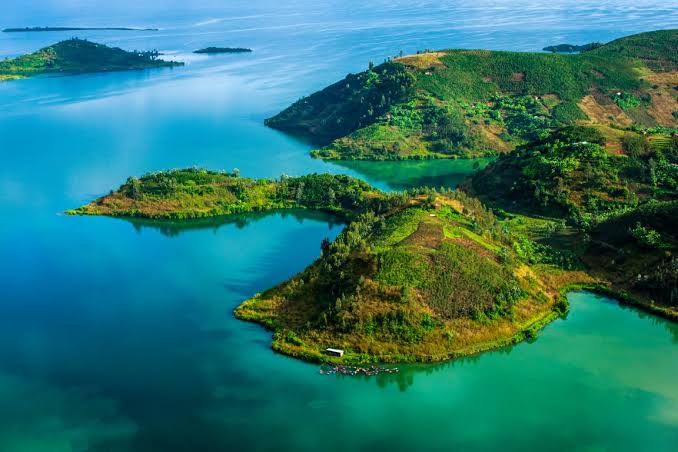
Lake kivu, Rwanda
Top Tourist attraction features around Lake Kivu
Lake Kivu offers a collection of attractions that extend far beyond its shoreline. From Islands inhabited by wildlife to cultural landmarks, coffee estates, historic sites, and nature trails, every destination around the lake reveals a different chapter of western Rwanda. Instead of concentrating its attractions in one place, the lake spreads them across several districts, allowing visitors to discover contrasting landscapes, local traditions, and ecological treasures as they move from one town to another.
Rubavu waterfront
Rubavu serves as the northern gateway to Lake Kivu and is one of Rwanda’s leading leisure destinations. The town’s waterfront combines recreation with urban convenience, making it popular among both residents and international visitors. The lakeside promenade is lined with open-air cafés, hotels, art shops, and restaurants where guests can dine while watching boats cross the Lake. Public beaches provide designated swimming areas, while nearby marinas host canoeing and paddle boarding activities. During weekends and public holidays, the waterfront comes alive with music performances, family gatherings, volleyball matches, and local food vendors selling grilled tilapia and roasted maize. The area also provides uninterrupted views towards the Congolese city of Goma across the Lake, offering a fascinating glimpse into two neighbouring countries separated only by water.
Napoleon Island
Among Lake Kivu’s most iconic landmarks is Napoleon Island, named after its unusual outline, which resembles Napoleon Bonaparte’s military hat when viewed from above. The Island is reached by boat from Karongi and rewards visitors with short hiking trails that climb through indigenous vegetation to panoramic viewpoints.
Its greatest attraction is a large colony of straw coloured fruit bats that roost among the trees during daylight hours before taking flight at dusk in spectacular numbers. Bird
enthusiasts frequently spot cormorants, kingfishers, fish eagles, and herons around the Island’s rocky shores, making it one of the lake’s finest locations for wildlife observation.
Amahoro Island
Amahoro Island offers an entirely different experience from Napoleon Island. Its quiet surroundings and limited development make it an ideal retreat for visitors seeking privacy and nature. The Island’s grassy clearings are perfect for picnics while its shoreline provides excellent locations for photography and bird watching. Local guides often share stories about the Island’s history and the meaning of “Amahoro”, which translates peace. The absence of heavy tourist infrastructure allows visitors to appreciate the island in its natural state, accompanied only by the sounds of birds and gently moving water.
Nyamirundi Coffee Island
Near the shore of Nyamirundi Island, where one of Rwanda’s best known coffee experiences awaits. Coffee plants thrive in the mineral-rich volcanic soil, producing Arabica beans exported to markets around the world. Visitors participate in hands on tours that demonstrate every stage of coffee production, from harvesting ripe cherries and hand sorting beans to roasting them over charcoal fires and preparing a freshly brewed cup. Beyond coffee itself, the Island offers insight into the livelihoods of farming families whose work has earned Rwanda international recognition for specialty coffee production
Congo Nile Trail
Stretching between Rubavu and Rusizi, the Congo Nile Trail introduces visitors to rural communities rarely seen on conventional sightseeing routes. Rather than passing through urban centres, the trail winds across cultivated hillsides, banana plantations, eucalyptus forests, and lakeside villages where daily life continues much as it has for generations. Visitors encounter school children walking to class, fishermen repairing wooden boats, women carrying baskets of fresh produce, and roadside markets selling tropical fruits. Every section presents different scenery, ensuring that hikers and cyclists experience both the cultural and environmental diversity surrounding Lake Kivu.
Bisesero Genocide Memorial
Located in the hills overlooking Lake Kivu, the Bisesero Genocide Memorial stands as one of Rwanda’s most significant historical landmarks. The memorial honours thousands of people who courageously resisted attacks during the 1994 Genocide against the Tutsi. Through preserved sites, memorial buildings, and guided interpretation, visitors gain a deeper understanding of Rwanda’s painful history and its journey toward reconciliation. The memorial provides an important cultural dimension to a Lake Kivu
itinerary, reminding visitors that the region’s identity extends beyond its natural attractions.
Bralirwa brewery experience
Rubavu is a home to one of Rwanda’s oldest industrial landmarks, the Bralirwa brewery. Guided tours take visitors behind the scenes of the country’s largest beverage producer, explaining the production of popular drinks such as primus, Mutzig, and soft beverages. Guests observe modern bottling lines, learn about quality control processes, and discover the company’s contribution to Rwanda’s manufacturing sector before concluding with product tasting sessions. The brewery offers a distinctive attraction that combines industry, history, and local culture.
Local fishing harbours
Small harbours scattered around Karongi, Rubavu, and Nyamasheke provide an authentic glimpse into the economic importance of Lake Kivu. Early mornings see fishermen unloading their overnight catch of Sambaza and tilapia before traders transport the fish to nearby market and restaurants, the colourful wooden boats, traditional woven baskets, and bustling fish markets reveal how the lake continues to support thousands of households. Visitors interested in photography often arrive before sunrise to witness this daily exchange between fishermen, traders and buyers.
Lake Kivu’s hidden Peninulas
The irregular shoreline of Lake Kivu has created numerous peninsulas that extend into the water, forming secluded viewpoints rarely crowded by tourists. Places such as Karongi peninsula and sections around Kinunu offer elevated locations where visitors can appreciate the vastness of the lake without interruption. These landscapes are especially popular among photographers because they reveal the intricate pattern of Islands, bays, and distant mountain ranges from a single vantage point.
Kinunu cultural and agricultural landscape
The Kinunu area is situated between Karongi and Rubavu and combines agriculture with cultural tourism. Visitors explore tea estates, coffee farms, traditional homesteads, and local craft workshops while enjoying sweeping views across Lake Kivu. Community guides explain how farming techniques have evolved over generations and demonstrate activities such as basket weaving, banana beer production, and traditional food preparation. Kinunu offers visitors the opportunity to connect directly with rural life, making it one of the lake’s most rewarding cultural attractions.
Activities done while at Lake Kivu, Rwanda.
Lake Kivu offers experiences that encourage visitors to become part of the destination rather than simply admire it from a distance. The lake’s varied landscape creates opportunities for adventure, cultural encounters, wellness, and outdoor recreation, ensuring that every visitor finds an activity suited to their interests. Whether exploring the water, interacting with local communities, or discovering the surrounding countryside, each experience reveals a different side of one of Rwanda’s most treasured
natural destinations.
Take a guided boat excursion
One of the most rewarding ways to experience Lake Kivu is by joining a guided boat excursion. Unlike travelling by road, a boat journey provides uninterrupted views of the shoreline, hidden coves, forested islands, and fishing villages that are inaccessible by land. Excursions often depart from Rubavu or Karongi and may include visits to Napoleon Island, Amahoro Island, and Monkey Island. Local guides explain the history of the Islands, identify bird species along the route, and share fascinating stories about
the communities that depend on the lake for their livelihoods. Depending on the itinerary, visitors may also stop at secluded beaches for relaxation or swimming before continuing their journey.
Kayak along the shoreline
Kayaking offers a slower and more intimate way of discovering Lake Kivu. Paddling close to the shoreline allows visitors to explore quiet inlets, observe birds feeding along the reeds, and pass traditional fishing boats preparing for the day’s work. Multi-day Kayaking expeditions are also available, enabling participants to travel between villages while camping or staying in lakeside guesthouses. Because the activity relies solely on human power, it provides an environmentally friendly way to appreciate the lake’s diverse scenery while enjoying light physical exercise.
Cycling at Congo Nile Trail
Cycling sections of Congo Nile Trail are one of the most popular adventures in western Rwanda. Riders travel through coffee-growing villages, banana plantations, eucalyptus woodlands, and terraced farmland while enjoying sweeping views of the lake below. Along the route, cyclists frequently stop at local markets, community projects, and roadside cafés to interact with residents and sample fresh tropical fruits or traditional snacks. The trail varies in difficulty, making it suitable for both experienced cyclists and leisure riders depending on the section chosen.
Hike through lakeside communities
Walking trails surrounding Lake Kivu introduce visitors to areas that vehicles often cannot reach. Guided hikes pass through farming communities, forest paths, and elevated viewpoints where the changing landscape unfolds with every step. Along the way, visitors may encounter farmers harvesting coffee, children walking to school, women weaving traditional baskets, and fishermen repairing wooden boats, these walks provide opportunities for meaningful cultural exchanges while highlighting the everyday
lifestyle of communities living around the lake.
Experience traditional fishing
Joining local fishermen during their evening fishing expeditions offers one of the lake’s most authentic cultural experiences. Before sunset, crews prepare long wooden boats fitted with lanterns that attract sambaza, a small silver fish found in Lake Kivu. As darkness falls, visitors witness the teamwork involved in the casting nets and navigating the lake while listening to traditional songs sung in rhythm with the work. The experience provides a rare insight into a livelihood that has supported lakeside communities for generations and continues to play an important role in the region’s economy.
Swimming and enjoying water recreation
Several designated beaches around Rubavu provide safe locations for swimming and relaxing in the fresh waters of Lake Kivu. The gentle shoreline and pleasant climate make the lake an inviting place to cool off, particularly during the dry season. Many lakeside resorts also offer paddle boarding, canoeing, and beach volleyball, allowing visitors to combine leisure with outdoor recreation. Families often spend entire afternoons enjoying these facilities while taking in the views across the lakes.
Visit coffee farms and take coffee-tasting tours
The fertile volcanic soils surrounding Lake Kivu support some of Rwanda’s finest Arabica coffee plantations. Visitors can join guided coffee tours where they harvest ripe coffee cherries, observe traditional processing techniques, roast beans over charcoal, and prepare freshly brewed coffee under the guidance of local farmers. These experiences provide a deeper appreciation of Rwanda’s internationally recognised coffee industry while directly supporting community-based tourism initiatives.
Observe birds and wildlife
The shores and islands of Lake Kivu attract numerous bird species throughout the year, making bird watching a rewarding activity for nature enthusiasts. Guided excursions frequently reveal African fish eagles soaring above the water, pied kingfishers diving for fish, cormorants drying their wings on the rocky outcrops, and colourful weavers nesting on lakeside vegetation. Boat trips to Islands such as Napoleon Island also provide opportunities to observe large colonies of fruit bats and other wildlife unique to the lake’s ecosystem.
Enjoy lakeside dining
Dining beside Lake Kivu is an experience in itself. Restaurants in Rubavu, Karongi, and Nyamasheke prepare freshly caught fish, including tilapia and sambaza, alongside traditional Rwandan dishes such as grilled goat meat, plantains, cassava, and fresh vegetables. Many establishment position their outside terraces directly beside the water, allowing guests to enjoy local cuisine while watching fishing boats, sunsets, or evening lights reflecting across the lake. The combination of regional flavours and scenic surroundings makes every meal memorable.
Watch the sunset from a scenic viewpoint
As daylight fades, visitors often make their way to elevated viewpoints or lakeside terraces to witness one of Lake Kivu’s most captivating natural displays, the changing colours of the sky reflect across the water, while distant mountains gradually fade into silhouette. Photographers, couples and solo visitors gather to capture the moment or simply appreciate the peaceful transition from day to night. This a simple activity, yet one that many visitors remember long after leaving Rwanda. These activities showcase Lake Kivu as more than a destination for sightseeing. They invite visitors to paddle, hike, cycle, fish, taste, learn and connect with the landscapes and communities that define Rwanda’s largest lake. Rather than rushing from one attraction to another, visitors become part of the rhythm of life along the shore, discovering that the most memorable experiences often come from participating rather than simply observing.
How to get to Lake Kivu
Lake Kivu is easily accessible from Kigali, Rwanda’s capital through a well-developed road network that connects the country’s major Lakeside destinations. Visitors can travel to Rubavu [Gisenyi] on the northern shore, Karongi [Kibuye] in the central region, or Rusizi [Cyangugu] on the southern shore, depending on the experience they seek. The lake can be reached by private car, guided tour vehicle, or public bus, all of which operate regularly from Kigali and other major towns across Rwanda. The journey to Rubavu takes approximately 4 hours, while Karongi can be 3 hours, making it the closest and most convenient lakeside destination. Visitors heading to Rusizi should expect a road journey of about 6 hours. Those with limited time can opt for a domestic flight to Kamembe airport, located near Rusizi, followed by a short drive to the lakeshore.
Throughout the journey, visitors are treated to spectacular views of Rwanda’s rolling hills, tea plantations, terraced farms, and picturesque villages, making the trip an attraction in itself. For a seamless and unforgettable journey, Nirvana Safaris offers professional guided Lake Kivu tours tailored to every visitor’s interests. From comfortable transportation and carefully selected lakeside accommodations to expertly planned itineraries, the company ensures every detail is handled with care, whether you wish to relax on the beaches of Rubavu, cruise to the Islands of Karongi, or explore the tranquil shores of Rusizi, Nirvana Safaris provides knowledgeable guides, personalised services, and authentic local experiences that transform a simple visit into a memorable adventure. With reliable transport, exceptional hospitality, and a commitment to creating meaningful travel experiences, choosing Nirvana Safaris allows visitors to discover the beauty of Lake Kivu with comfort, confidence, and lasting memories.
Best time to visit Lake Kivu –Rwanda
The best time to visit is during Rwanda’s dry seasons, from June-September and December-February. These months offer warm temperatures, sunny skies, and a little rainfall, creating ideal conditions for enjoying the lake’s natural beauty and outdoor activities. Calm waters make it perfect for boat cruises, kayaking, swimming, paddle boarding, fishing and Island excursions, while the surrounding landscapes provide excellent hiking opportunities, birding watching, and photography. The June- September season is particularly popular because of its pleasant weather and clear views of the surrounding hills and Islands. It is also an excellent time to combine a visit to Lake Kivu with gorilla trekking or wildlife safaris other parts of Rwanda. The December-February dry season is equally enjoyable offering lush scenery, comfortable weather, and fewer interruptions from rain.
Although the rainy seasons between March-May and October-November bring occasional showers, Lake Kivu remains a beautiful destination. The hills become greener, waterfalls are more impressive, and visitor numbers are lower, providing a peaceful atmosphere. To make the most if visit, Nirvana Safari offers expertly planned tours, comfortable accommodation, and personalised itineraries ensuring a memorable Lake Kivu experience regardless of the season.
The untold facts about Lake Kivu
Lake Kivu is widely admired for its breath-taking scenery and peaceful beaches, but beneath is calm waters lies one of the world’s most extraordinary natural wonders. Formed approximately 2,000,000 years ago during the geological activity that created the Albertine Rift, Lake Kivu is one of Africa’s Great Valley Lakes. Today, it stretches for about 2,700 km 2 , making it Africa’s sixth-largest lake and one of the content’s most remarkable freshwater bodies. One of Lake Kivu’s most fascinating secrete is that it is one of only 3 exploding lakes in the world. Deep beneath its surface lie enormous deposits of dissolved methane and carbon dioxide, trapped by the lake’s unique depth and geological structure. Scientists estimate that the lake contains around 60 billion cubic metres of methane and nearly 300 billion cubic metres of carbon dioxide. Although these gases could pose a natural hazard if released suddenly, Rwanda has transformed this challenge into an opportunity through the kivuWatt project, launched in 2015. The project safety extracts methane from the lake to generate electricity, supplying power to thousands of homes and business while reducing the risk of gas
build-up. Another little-known fact is that Lake Kivu has no crocodiles and no hippopotamuses, unlike many other African lakes. This makes it one of the safest freshwater lakes on the continent for swimming, Kayaking, paddle boarding, and recreational boating.
Popular beaches such as those in Rubavu [Gisenyi] attract visitors looking to enjoy the water without the dangers commonly associated with Africa’s larger lakes. Lake Kivu is also home to more than 150 Islands, each with its own story and character. Among the best- known is Napoleon Island, located near Karongi [Kibuye], whose shape resembles Napoleon Bonaparte’s famous hat. The Island is home to a large colony of fruit bats, making it a fascinating destination for nature lovers. Nearby Amahoro Island, meaning “Island of Peace,” offers a tranquil retreat with secluded beaches and excellent opportunities for camping, bird watching, and canoeing. Historically, Lake Kivu has played an important role in the lives of communities living along its shores, for centuries, it’s served as a natural trade route connecting settlements in present-day Rwanda and the Democratic Republic of Congo. Local fishermen continue to use traditional wooden boats, especially at night, when lanterns illuminate the lake as they catch sambaza, a small silver fish that has become one of the region’s most popular delicacies. The lake is equally rich in biodiversity. Its shoreline supports numerous bird species, including African fish eagles, malachite kingfishers, great cormorants, and grey crowned cranes, while the surrounding hills are covered with coffee plantations, banana groves, eucalyptus forests, and terraced farmland.
These landscape create one of Rwanda’s most picturesque destinations and contribute to the country’s reputation as the “land of a thousand hills” Perhaps the greatest untold story of Lake Kivu is how it perfectly blends natural beauty, scientific, renewable energy innovation, rich biodiversity, and cultural heritage in one destination, few places in Africa allow visitors to relax on safe beaches, explore volcanic islands, witness traditional fishing practices, and discover a lake that is helping power an entire nation. These unique qualities make Lake Kivu far more than a scenic attraction; they make it one of Rwanda’s most remarkable natural treasure.
Commonly asked questions about Lake Kivu –Rwanda
Lake Kivu attracts visitors because it offers a unique combination of relaxation, adventure, culture, and breathtaking scenery in one destination. Stretching for about 89km from north to south within Rwanda, the lake is lined with charming waterfront towns, luxury lodges, fishing communities, and scenic viewpoints. Unlike destinations that focus on a single attraction, Lake Kivu allows visitors to enjoy beach holidays, Island excursions, cultural encounters, coffee experiences, cycling, and water sports within the
same trip. The peaceful atmosphere also makes it an ideal place to unwind after demanding adventures such as gorilla trekking or volcano hiking. Its accessibility from Kigali and its year-round pleasant climate further contribute to its popularity among both domestic and international visitors.
1. Is Lake Kivu suitable for a family holiday?
Absolutely. Lake Kivu is an excellent destination for families because it offers activities suitable for visitors of all ages. Children can enjoy gentle boat rides, lakeside picnics, beach games, and nature walks. While adults can participate in kayaking, paddle boarding, fishing, or cultural excursions. Many lakeside resorts provide family friendly accommodation, children’s play areas, swimming pools, and spacious gardens overlooking the water. Educational experiences, including visits to local coffee farms and
community projects, also allow families to learn about Rwanda’s culture and economy while enjoying a relaxing holiday together.
2. Can you cross Lake Kivu between Rwanda and the democratic republic of Congo?
Although Lake Kivu forms part of the natural border between Rwanda and the democratic republic of Congo, crossing the international boundary requires compliance with immigration regulations. Visitors wishing to travel between the two countries must use official border posts and carry valid passports, visas, and other required travel documents. Boat services operating on the lake primarily serve tourism and local transportation within Rwanda unless they are specially authorised for cross-border travel. Visitors should always confirm current border procedures before making international travel plans.
3. What cultural experiences can visitors enjoy around Lake Kivu?
The communities surrounding Lake Kivu preserve many traditions that provide visitors with authentic cultural experiences. Local markets display handcrafted baskets, woven mats, pottery, wood carvings, and colourful fabrics made by skilled artisans. Visitors can also enjoy traditional Rwandan dance performances, music, storytelling sessions, and locally prepared cuisine featuring fresh produce grown in the fertile hills surrounding the lake. Community-based tourism initiatives allow visitors to interact with residents, learn traditional farming methods, and discover how lakeside communities have maintained their cultural heritage while embracing modern tourism.
4. Is Lake Kivu worth visiting as part of a Rwanda Safari?
Yes. Lake Kivu perfectly complements Rwanda’s wildlife experiences by providing relaxation after active adventures. Many visitors include the lake in their itinerary following gorilla trekking, chimpanzee tracking, or game drives because it offers a peaceful environment to rest before returning home. Luxury resorts, boutique hotels, wellness spas, and quiet lakeside retreats provide excellent opportunities to unwind while enjoying panoramic views of the surrounding mountains. Whether visitors stay for one night or several days, Lake Kivu adds balance to a Rwanda Safari by combining nature, comfort, culture, and scenic beauty in a single destination.